
Most window blinds last somewhere between 5 and 20 years. The exact figure depends on three things: what the blind is made of, how well it is looked after, and how often it gets used. A quality timber venetian in a quiet study can still look sharp after two decades, while a cheap blind on a west-facing window that gets yanked up and down all day might be tired in five.
So, the honest answer to how long a blind lasts is: it depends, but within a predictable range. Here is what to expect by material, and what makes the difference between the short end and the long end of that range.
Material is the single biggest factor. Some hold up to sun, moisture and daily handling far better than others. As a general guide for quality, made-to-measure blinds:
| Blind type | Typical lifespan |
|---|---|
| Timber venetian (basswood, cedar) | 15 to 20+ years with basic care |
| PVC venetian | 10 to 15 years, very moisture-tolerant |
| Roller blinds | 8 to 15 years depending on fabric and use |
| Vertical blinds | 5 to 10 years, the moving parts wear first |
| Aluminium venetian | 10 to 15 years, prone to bent slats |
Timber venetians tend to last longest. Real timber like basswood and cedar produces natural oils that help it resist warping, cracking and fading, so a well-made set can hold its shape and finish for 20 years or more. PVC venetians shrug off moisture, which is why they outlast most things in kitchens and bathrooms. Roller blinds sit in the middle, with the fabric and the chain or motor usually being the parts that age. Vertical blinds often reach the end of their life first, not because the slats fail, but because the carriers and chains that move them wear out with use.
Looking after a blind is the cheapest way to add years to it, and it takes very little effort.
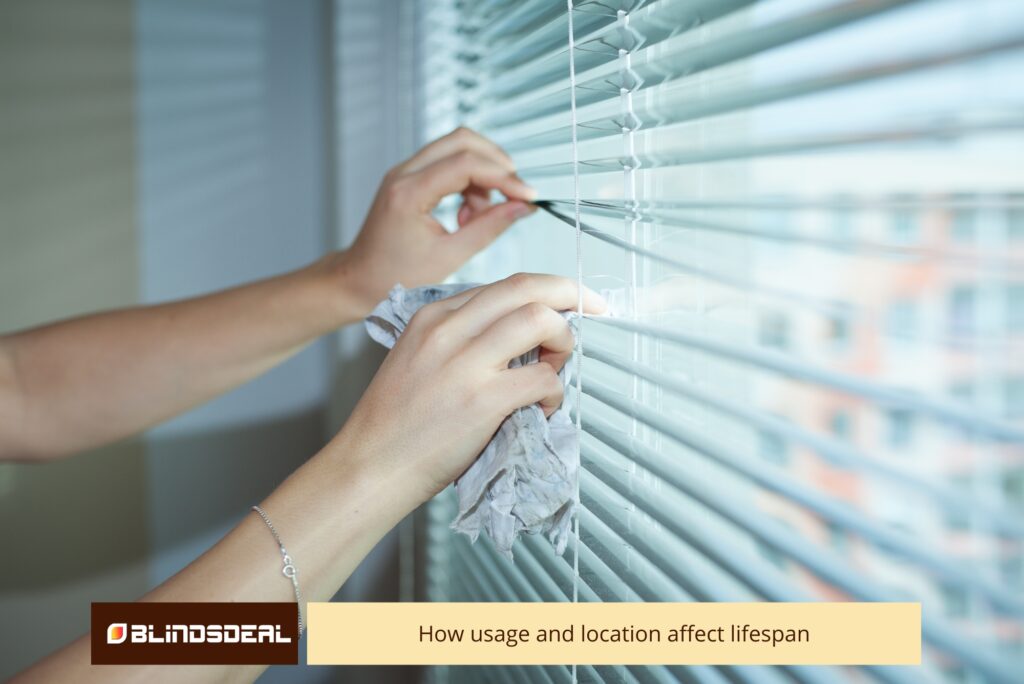
Dust is the quiet enemy. It builds up in the fabric, around the chain, and in the moving parts, and over time it makes mechanisms stiff and grinds away at them. A regular light dust with a feather duster or microfibre cloth keeps things running smoothly. For a deeper clean, a lightly damp cloth handles most marks on roller blinds and venetians. Wet areas need a bit more attention: wiping down blinds in kitchens and bathrooms stops grease and grime building into a sticky film.
Operating a blind gently matters too. Pulling a chain at an angle, forcing a stuck slat, or letting a blind drop hard all put strain on the parts that are most likely to fail. Treat the mechanism kindly and it will last.
Two identical blinds can age at very different rates depending on where they hang and how hard they work.
Sun exposure is the big one. A blind on a north or west-facing window cops’ hours of harsh Australian sun, and UV slowly fades fabric and can make some materials brittle. The same blind on a shaded south-facing window will look new for far longer. Frequency of use is the other factor. A blind in a main living area or on a busy sliding door is operated many times a day, so it’s moving parts clock up wear quickly, while one in a spare room barely ages.
Moisture and households with kids or pets add their own wear. In short, match the blind to the spot. A tougher, moisture-tolerant option in a hard-working room will outlast a delicate one used in the wrong place.
Blinds rarely fail all at once. They give you warning. Look for:
If you are ticking off two or three of these, it is usually more cost-effective to replace than to keep patching, especially on a blind that is already past its expected life.
Lifespan starts at the point of purchase. A few choices make the difference between a blind you replace in five years and one you forget about for fifteen.
Buy quality materials suited to the room, choose a made-to-measure blind that fits properly so it is not straining against the frame, and look for a solid warranty as a sign the maker stands behind the build. Our blinds are made to order and backed by a 10-year manufacturer’s warranty covering manufacturing defects, which reflects how long a well-built blind should last. If you are after a low-maintenance all-rounder, shop roller blinds. For the longest life and a natural look, our basswood and cedar timber venetians are built to last decades, and for wide windows and sliding doors our vertical blinds are a practical pick.
Blinds Deal makes custom window blinds to your exact measurements and ships them free anywhere in Australia, direct from our factory. Whether you are replacing tired blinds or fitting out a new home, we can help you choose a blind that suits the room and lasts. Browse the full range of window blinds, or email the team at sales@blindsdeal.com.au and we will reply with a quote or advice within one to two business days.