
If you’ve ever tried to dust a fabric roller blind with a damp cloth and watched it pill, you’ll know that not all window blinds clean up the same way. The material matters a lot, both how hard the cleaning job is and how often you need to do it.
Here’s a straightforward rundown of the most common blind materials, how easy they are to keep clean, and which rooms each one suits best.
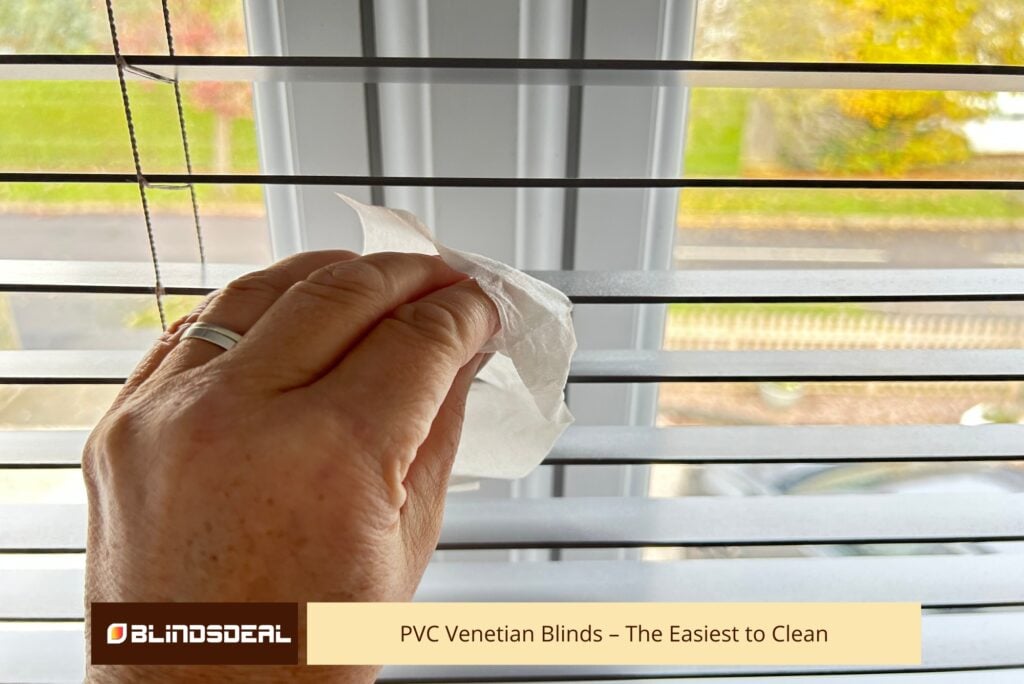
PVC is the clear winner for low-maintenance cleaning. The slats are smooth, non-porous and moisture-resistant, so dust and grease sit on the surface rather than soaking in.
For regular maintenance, wipe each slat with a damp microfibre cloth. For a greasier build-up (common in kitchens), a small amount of dish soap in warm water does the job. Dry the slats after to prevent water marks.
Some people run the slats through a bathtub of warm soapy water for a deep clean, which works well for PVC. Just make sure you dry them thoroughly before rehanging. Any moisture left in the mechanism can cause issues over time.
PVC venetians are well suited to bathrooms, laundries and kitchens for exactly this reason. They handle steam, humidity and splashes without warping or absorbing odours.
Timber venetians are almost as easy to clean as PVC, with one important difference: no soaking, no bathtub method, no wet cleaning beyond a lightly damp cloth.
For regular dust, a dry microfibre cloth or a soft duster across each slat is all you need. Tilt the slats one way, dust that side, then tilt the other way and do the other side. It takes a few minutes and keeps them looking good.
If there’s a mark that won’t shift, a slightly damp cloth wrung out well works fine. Just don’t let water sit on the timber. Excess moisture can cause the wood to warp or the finish to lift over time, particularly with basswood.
Keep timber venetians away from kitchens and bathrooms for this reason. In living rooms, bedrooms and studies they’re a practical choice that also looks good.
Roller blinds cover a wide range of fabric types, and cleanability varies quite a bit between them.
Sunscreen fabric is woven with small openings that let filtered light through while reducing glare. Because it’s open-weave, dust can settle into the gaps rather than just sitting on the surface.
A light vacuum on a low setting with a brush attachment is the easiest way to maintain sunscreen blinds regularly. For spots and marks, a damp cloth with a mild detergent works, but test a small area first. Some sunscreen fabrics are treated with coatings that don’t respond well to scrubbing.
Blockout roller blinds have a backing layer that prevents light from passing through. Most blockout fabrics have a smooth face that’s reasonably easy to wipe down.
A damp cloth handles most marks. Avoid soaking the fabric or machine washing. The backing layer can delaminate if it gets too wet or goes through a washing cycle. Spot clean only.
Light filtering fabrics are generally the trickiest roller blind material to clean. They’re often textured or loosely woven, which means dust embeds easily and marks are harder to remove without spreading.
Regular vacuuming with a brush attachment keeps them in reasonable shape. For marks, a very lightly damp cloth with gentle dabbing (not rubbing) is the safest approach. Aggressive cleaning can damage the weave or distort the fabric.
Vertical blinds come in fabric and PVC slat options. The PVC version cleans exactly like PVC venetians, wipe down with a damp cloth and you’re done.
Fabric vertical slats are more involved. They can often be unclipped and taken down for spot cleaning, which is easier than trying to clean them while hanging. Some fabric slats are machine washable on a gentle cold cycle. Check the manufacturer’s specifications before you try it, as not all of them are.
Lay fabric slats flat to dry rather than hanging them. This prevents water marks from running down to one end.
Whatever material you’re working with, regular light cleaning is much easier than occasional heavy cleaning. A quick dust every few weeks stops the build-up that makes blinds look grimy and shortens their life.
If low maintenance is your main priority, particularly in a kitchen, bathroom or laundry, PVC venetians are the practical choice. They handle moisture, they wipe clean quickly, and they don’t need any special care.
For living rooms and bedrooms where you want a warmer look, timber venetians are nearly as easy to maintain and they last well with basic care. Roller blinds in blockout or sunscreen fabric work fine in those rooms too, provided you vacuum them occasionally and spot clean as needed.
Light filtering fabric roller blinds are worth choosing for their light quality, but go in knowing they need a bit more care than the other options.
If you’re not sure which blind suits your room, get in touch with the Blinds Deal team at sales@blindsdeal.com.au. They can help you match the right material to your room and your cleaning preferences before you order.