
Yes. Roller blinds are one of the better options for kitchens and bathrooms, if you choose the right fabric. The flat panel design, minimal projection from the wall, and easy-wipe surface make them practical in rooms where moisture, steam, and grease are a regular part of daily life.
The question worth asking is not whether roller blinds can go in wet areas, but which roller blind fabric is the right fit for your specific room.
These rooms put window coverings through more than any other area of the house. Bathrooms generate steam every time someone showers. That moisture gets into fabric fibres, behind slats, and into any fold or pleat where it can sit and eventually cause mould or mildew.
Kitchens deal with airborne grease and condensation from cooking. Over time, fabric that absorbs grease becomes difficult to clean and starts to look dingy regardless of how often you wipe it down.
Both rooms also tend to get more direct splashing near windows than most people account for when choosing a blind. A window above a kitchen sink or beside a shower recess needs something that can handle occasional contact with water without warping or staining.
Curtains are a poor choice for kitchens and bathrooms. The fabric pools near the window, collects moisture and grease, and needs regular washing. Roman blinds have folds that trap steam and are difficult to clean thoroughly.
Roller blinds have one flat panel with no folds, no pleats, and no places for moisture to hide. When the blind is open, it rolls up above the window out of the steam zone entirely. When it is down, the smooth surface can be wiped clean with a damp cloth. There is no mechanism that rusts, no slats that warp, and no fabric bunching at the bottom where water collects.
The aluminium roller tube and hardware are also resistant to the humidity levels typical of a domestic bathroom or kitchen. A well-installed roller blind in these rooms should last if one anywhere else in the house, provided there is reasonable ventilation.
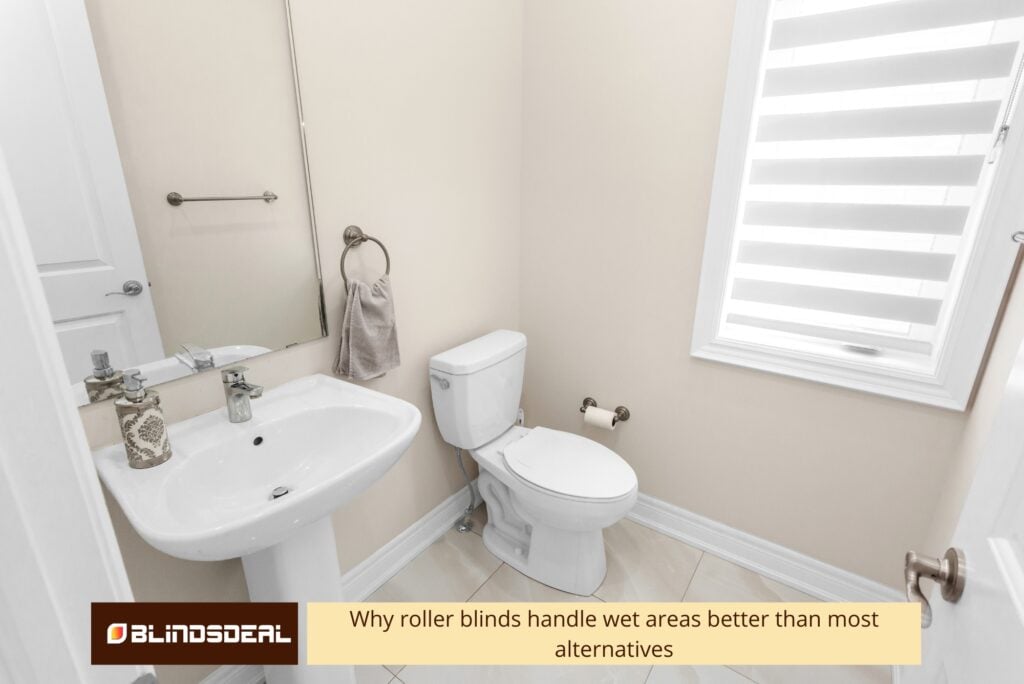
Blinds Deal roller blinds come in two fabric ranges. Here is how each performs in wet areas.
Sunscreen fabric is a woven open-weave material that filters light while maintaining some outward visibility. It handles moisture well, is easy to wipe down, and does not absorb steam the way thicker woven fabrics do.
For bathrooms with good natural light, or kitchen windows where you want to reduce glare without losing the view, sunscreen is a practical choice. Available in ice white, white, white, grey, and charcoal. The lighter shades keep the room feeling open; charcoal is worth considering if the window faces a busy street or neighbouring property were privacy matters more.
Blockout fabric is a denser, coated material that blocks all light. The coating also makes it more resistant to moisture absorption than uncoated fabrics, which is useful in a bathroom where the blind will be exposed to steam regularly.
For bathrooms where privacy is the main concern and natural light is less of a priority, blockout is a good call. It is also suitable for kitchen windows on the south or west side of a house where direct sunlight is not the issue, but you still want full coverage. Available in ice, cloud, mist, and storm.
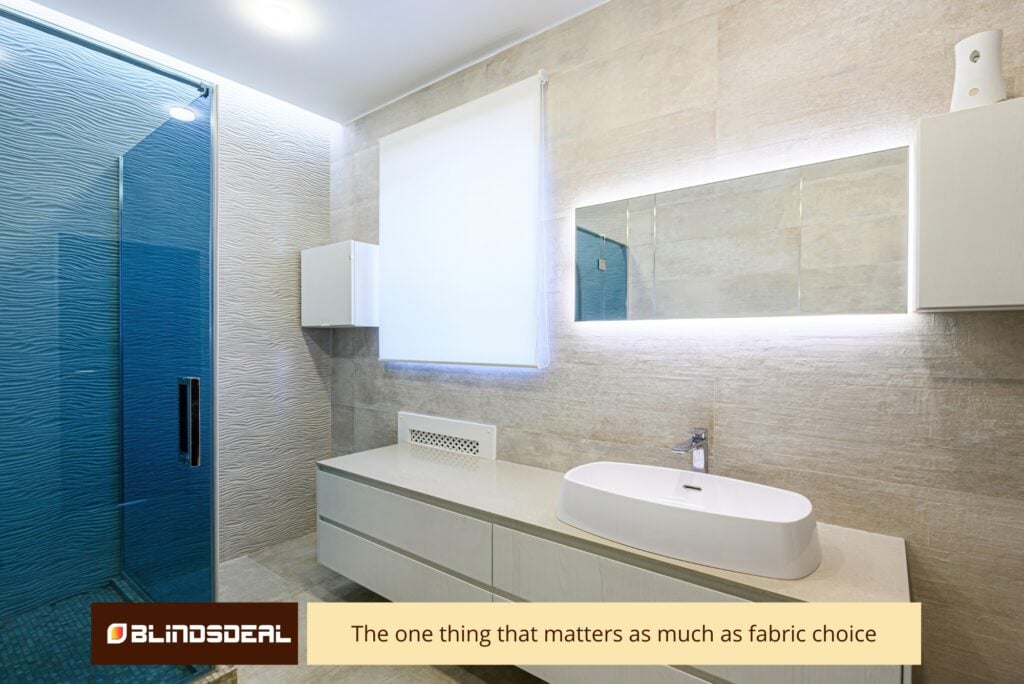
Ventilation. Even the most moisture-resistant blind will eventually show signs of mould if it is installed in a bathroom with no exhaust fan and no window that opens. No window covering is a substitute for adequate airflow.
In a well-ventilated bathroom, roller blinds perform reliably for years. In a poorly ventilated one, anything fabric-based will eventually have problems. Sort the ventilation first, then choose the blind.
For wet areas, outside mount (fixing the blind to the wall above the window frame rather than inside the recess) is often the better option. It keeps the blind further from direct steam and splash and means the fabric does not sit inside the recess where moisture can pool around the edges.
Inside mount gives a neater finish and works well if the recess is deep enough to allow the blind to operate without obstruction. For a shallow recess in a bathroom, outside mount is the more practical choice.
Custom roller blinds start from $64, made to your exact measurements, with free shipping Australia-wide. View the full range and get an instant price.