
To measure Venetian blinds correctly, you need three things: a steel tape measure, paper and pencil, and the right mount type confirmed before you start. Whether you are fitting inside a window recess or mounting over an architrave, the process follows the same logical sequence each time.
If you are new to the topic, the broader process of measuring your windows for blinds covers related blind types and wall considerations alongside the Venetian-specific steps below.
Use this before you pick up the tape measure:
| Mount type | Best for | Key measurement rule |
|---|---|---|
| Inside mount | Windows with a recess at least 60mm deep | Use the shortest width measured at top and bottom |
| Outside mount with architrave | Windows with a timber or metal surround | Measure from outer edge to outer edge of the architrave |
| Outside mount without architrave | Flat walls, maximum light block | Add at least 100mm to both width and drop |
| Split mount | Large windows or windows with a defined centre split | Measure each half separately; take the drop in three places |
An inside mount sits within the window recess, giving a neat, recessed finish.
Before you measure: check that the recess depth is at least 60mm. If the depth is shallower, the blinds will protrude past the frame, and an outside mount will produce a cleaner result.
Step 1. Sketch the window. Draw a rectangle on paper representing the window recess. If you are measuring more than one window, label each drawing clearly, such as “Window 2 Master Bedroom”, so there is no confusion when you order.
Step 2. Measure the width. Place the tape measure inside the recess and measure the internal width at the top of the frame, then again at the bottom. Windows are not always perfectly square, so both readings matter. Record the shorter of the two widths. This is the measurement you will use for ordering.
Step 3. Measure the vertical drop. Measure from the top of the inside recess down to the base of the windowsill. Write this figure next to the word “drop” on your sketch.
Step 4. Double-check. Re-measure both figures before finalising your order. A small error at this stage costs far less to fix than a blind that does not fit.
An outside mount sits in front of the window frame rather than inside it. It works well when the recess is too shallow for an inside mount, when you want to maximise the visual size of the window, or when a full architrave is already present.
Step 1. Sketch and label the window. Use the same labelling approach as for inside mounts.
Step 2. Measure the width.
Step 3. Measure the vertical drop.
Step 4. Wall material check. If the blind is going onto a plaster or gyprock wall, locate the wall stud before installation. Fixing the bracket into a stud ensures the hardware can carry the weight of the blind properly.
Step 5. Double-check all measurements.
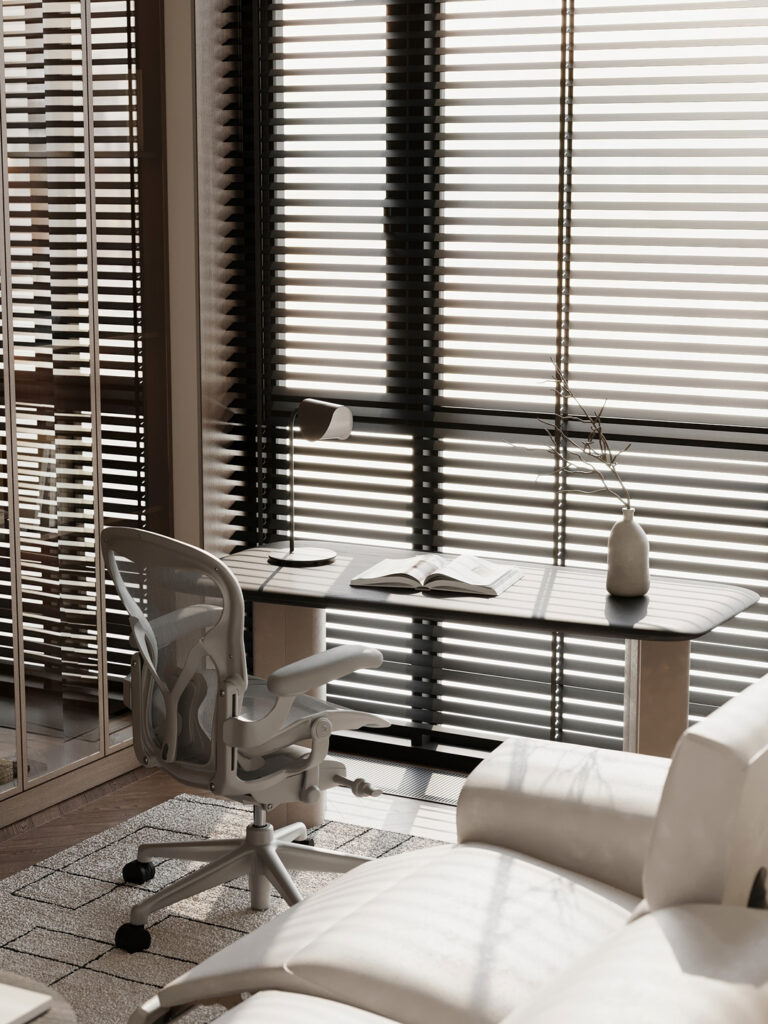
Split Venetian blinds suit large windows or windows with a defined structural split down the centre. Each half is measured and ordered separately.
Step 1. Draw a rectangle and mark a vertical line where you want the split to fall, then label each half.
Step 2. Mark the split point on the actual window with a piece of tape so your measurements align with the drawing.
Step 3. Measure the width of each half independently, from its outer edge to the split mark. For inside mounts, measure inside the recess; for outside mounts, measure from the intended outer edge to the split mark.
Step 4. Measure the vertical drop in three places across the window: left, centre, and right. Windows are often not perfectly level, and taking three readings prevents a blind that is too short on one side.
Step 5. Record all measurements clearly by section and double-check each one.
The measuring process for PVC Venetian blinds follows the same inside-mount and outside-mount steps described above. Check that the recess depth is at least 60mm, measure width at both top and bottom, take the shortest width, then measure the vertical drop.
PVC is a practical choice for humid rooms such as bathrooms and kitchens because it does not warp or swell in moisture-heavy environments the way timber can.
Made-to-measure blinds, including timber options such as basswood and cedar, are cut to your exact dimensions, so measurement accuracy is particularly important. Most suppliers ask for measurements in millimetres. Label every figure clearly as “width” or “drop” on your order form so there is no ambiguity.
Measuring only once. Width at the top and bottom of a window can differ by several millimetres. Always measure in both places.
Using the longer width for an inside mount. If the top and bottom widths differ, the blind must use the shorter measurement. A blind cut to the longer figure will not close inside the recess.
Forgetting the recess depth. A recess shallower than 60mm means the blind will protrude. Check this before ordering an inside mount.
Not adding overlap for outside mounts without architraves. Without at least 100mm of additional width and drop, the blind will leave visible light gaps around the frame edges.
Measuring in centimetres. Suppliers work in millimetres. Submitting centimetre figures, or a mix of both, is one of the most common causes of incorrectly sized orders.
Treating identically sized rooms as having identical windows. Two windows in the same kitchen, or even in the same wall, may have different widths. Measure every window individually.
Sketching without labels. A diagram without “width” and “drop” noted next to each figure creates ambiguity when ordering, particularly across multiple windows.
Measure each window section of the bay separately for both width and drop, since angles and widths often vary between sections. Record each section clearly and use the shortest width per recess for inside mounts.
Measure the same way as timber Venetians: check that the inside recess depth is at least 60mm, measure the width at top and bottom and use the shortest figure, then measure the vertical drop. PVC is a practical choice for humid rooms such as bathrooms and kitchens.
Most suppliers, including Blinds Deal, ask for measurements in millimetres (mm). Label each measurement as width or drop to avoid confusion when ordering.
Blinds Deal offers Venetian blinds in a range of materials, from PVC through to basswood and cedar, all made to your exact measurements. For questions about your measurements or product options, send an enquiry to sales@blindsdeal.com.au.