
Yes, you can fit blinds to odd-shaped windows, but standard off-the-shelf blinds rarely work. Custom-made blinds built to the exact outline of the window are the practical solution for arches, triangles, bay windows, and skylights.

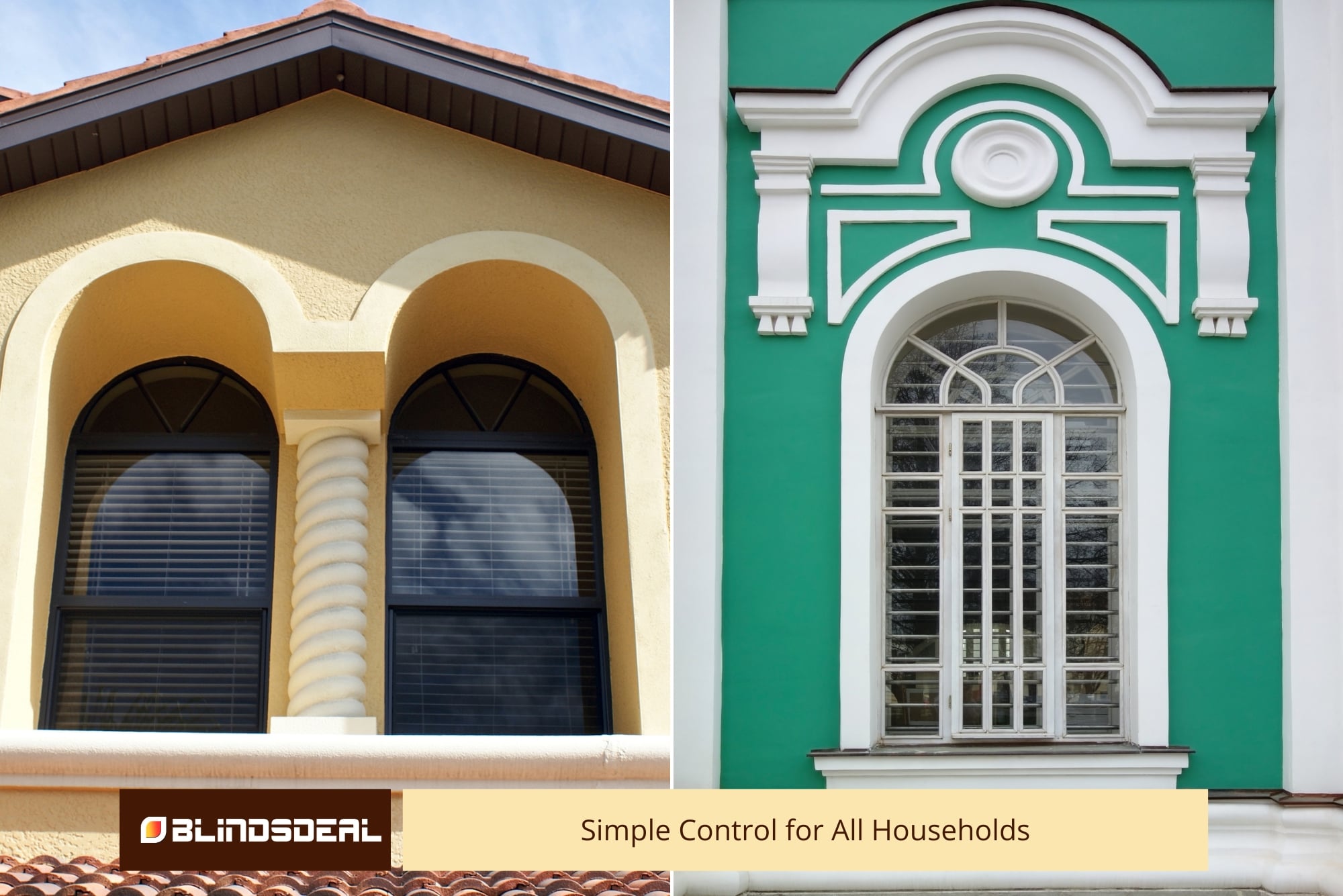
Australian homes span many architectural periods and styles, and several window shapes appear regularly:
Each shape calls for a different blind configuration, and identifying the shape precisely is the first step before choosing a product or placing an order.
Ready-made blinds are sized and structured for flat rectangular frames. On a curved, angled, or overhead window, a standard blind leaves uncovered gaps at the corners or along the slope. Those gaps reduce privacy, allow light to leak in, and make the window look unfinished.
On skylights and triangle windows, the problem runs deeper. A standard blind cannot follow the slope, so it may sag, bind in operation, or cover parts of the frame that do not need covering while leaving the functional area open. The result is a fitting that neither looks nor performs as intended.
Matching the blind type to the window shape determines whether coverage is complete and operation stays smooth.
Arch and round windows
The most practical approach is a blind shaped to follow the curve of the arch. Where a shaped blind is not available, a standard rectangular blind can cover the flat lower portion of the window, with a separate fixed panel or shaped cover filling the curved top section.
Bay and bow windows
Because the panels meet at angles, a single blind spanning the full opening will not lie flat or operate correctly. A separate blind for each panel, mounted independently, allows individual adjustment and follows the angled layout correctly. Among the products suited to this approach, roller blinds are a commonly used option because their slim cassette and clean drop work within the depth of each bay panel without obstruction.
Triangle and angled windows
These require a blind cut to match the slope, usually supported by angled rails or custom-made tracks that hold the fabric along the raked edge. Without the correct track, the blind cannot travel or hold position accurately.
Skylights
Skylights need tension-based systems or side channels that keep the blind pressed against the glazing as it travels. Without side channels, gravity and air movement cause the blind to bow away from the glass, reducing both coverage and appearance.
Where physical access is limited, such as high gable windows or overhead skylights, motorisation removes the need to reach the blind manually and is available across a range of shaped blind types.
Measurement errors are the most common cause of poor fit on shaped windows. Taking the measurements correctly before ordering saves the time and cost of a remake.
The approach varies by shape:
Use a steel tape rather than a fabric or plastic measure for accuracy. Where a window has both a straight lower section and a shaped upper section, measure both parts separately and record them as distinct dimensions.
The how to measure windows for blinds installation guide covers the full process with step-by-step detail for different window configurations, including how to record curved and angled frames so the measurement translates correctly into a made-to-measure order.
Blinds Deal provides measuring support to help customers avoid the most common sizing mistakes, and the measuring guide on the website includes format-specific instructions.
Many shaped blinds can be installed by homeowners with standard tools. The fitting process for bay-window blinds follows the same basic bracket-and-rail method as a standard rectangular blind, applied one panel at a time.
Some shapes do require additional hardware:
Before starting, check whether the product includes all brackets, channels, and hardware for the window type. Use a spirit level to keep the mounting straight. For high or overhead windows, assess ladder access before starting and consider whether professional fitting is the safer option.
Blinds Deal manufactures made-to-measure blinds for non-standard windows and ships across Australia. Products are made to the measurements supplied at order, and the range covers material options suited to different rooms and structural conditions, from light-filtering fabrics for living areas to more robust finishes for raked-ceiling or skylight applications.
Custom blinds usually cost more than ready-made options because they are built to your exact measurements and shape. The trade-off is a proper fit with no gaps and better light and privacy control on windows that standard blinds cannot cover.
Because each blind is made to your measurements, custom orders take longer than off-the-shelf products. Lead time depends on the blind type and finish, so confirm the current turnaround when you request a quote.
Yes. Motorisation is available for many shaped and hard-to-reach windows, such as skylights and high angled frames, where manual operation is awkward. Availability depends on the specific blind type and structure.
Many shaped windows can be measured at home with a steel tape by recording the widest and narrowest points and, for curves, the arc or radius. Professional measuring is worth considering for high, overhead, or complex angled windows where accuracy is harder to achieve.
Warranty terms vary by product and material, so check the coverage listed for the specific blind before ordering. Keep your order confirmation and measurement details in case you need to make a claim.