
Blinds for awkward shaped windows exist as genuinely custom products, not adaptations of standard sizes. If your window is arched, triangular, circular, or sharply angled, the right blind type, measurement approach, and mounting method differ for each shape. This guide covers the practical decisions for each one.
Before selecting any product, identify the window type precisely. An arched window sitting above a rectangular pane behaves differently from a full-circle porthole or a triangular gable window. The shape determines which blind mechanism can physically operate in the space and how the covering will mount.
When you are assessing a non-rectangular window, note whether the unusual portion is decorative (often left uncovered or treated separately) or functional (needs full light and privacy control). This distinction narrows your options considerably. For a broader look at the challenges involved in installing blinds on non-standard windows, including what structural factors affect fitting, the subject is worth reviewing before committing to a product type.
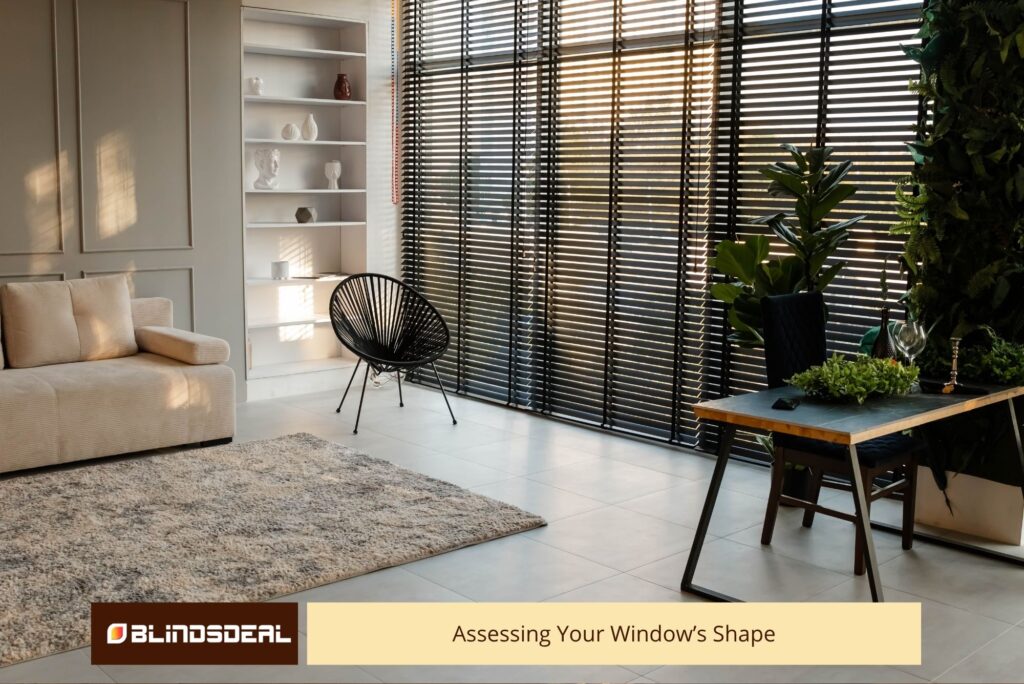
Arched windows are one of the most common non-standard shapes in Australian homes, appearing either as a full arch (half-circle top) or an eyebrow arch (shallower curve).
Custom cellular shades are the most practical solution for a full arch. The fabric is cut and pressed into a fan or arch shape, with the pleats radiating outward from a central pivot point at the base. The shade sits fixed within the arch rather than raising and lowering.
This suits decorative arches where light filtering matters more than daily operation.
Fan-style Roman shades follow a similar principle but use a flat-front fabric that is shaped to the arch curve and fixed in place.
For arched windows that sit above a standard rectangular casement, the most common approach is to treat the two portions separately: a custom arch shade for the top, and a standard or roller blind for the rectangular section below.
Mounting note: Arched shades require a custom-bent headrail or a shaped mounting board cut to the arc of the window. The installer traces the arch curve directly from the window opening to produce the template.
Triangular windows appear frequently in gable ends, attic rooms, and contemporary architectural designs. Angled windows include any opening where the top rail and bottom rail are not parallel.
Angled bottom-up blinds are purpose-made for these shapes. The bottom rail is cut at the same angle as the sloping window sill, so the blind follows the contour of the opening rather than hanging straight. They raise from the angled bottom edge upward, giving privacy on the lower portion while leaving the apex open for natural light.
Custom-cut shades are the alternative when a fixed covering is acceptable. The fabric panel is cut precisely to the triangular profile and mounted flat against the window. This works well for triangular windows that are difficult to reach and do not require daily adjustment.
Measurement note: For a triangular window, record the width at the widest point (usually the base), the full height from base to apex, and the angle of each sloping side. Asymmetric triangles need the angle measured on both sides separately because they are rarely mirror images of each other.
Circular, oval, and porthole windows present the most technically demanding fit. Standard blind mechanisms cannot span or follow a curve, so the options are narrower.
Custom circular shades are fabric discs cut to the exact diameter of the window, mounted on a rigid frame that sits inside or over the window reveal. They are fixed in position and provide light filtering or blackout depending on the fabric chosen.
Plantation shutters shaped to a circle or oval are another option. The shutter panel is built with custom-curved rails and can include adjustable louvres, giving some degree of light control while maintaining the look of the window shape.
For oval windows, the frame must be templated directly from the opening because hand-measuring an oval introduces significant margin for error.
Mounting note: Circular and oval coverings are almost always face-mounted (over the window reveal) rather than inside-mounted, since the reveal depth on porthole-style windows is often too shallow for an inside fit.
Measuring a standard rectangular window is straightforward. Non-standard shapes require additional measurements at multiple points because irregular windows rarely have consistent dimensions from one side to the other.]
Step-by-step measurement approach
For any window that is not a straightforward rectangle, professional measurement is the reliable path. A template traced on-site eliminates the fitting errors that remote measurement introduces. The guidance on how to measure your space for blinds covers the general principles that apply across window types.
| Window Shape | Recommended Blind Type | Typical Mounting | Fixed or Operable |
|---|---|---|---|
| Full arch | Custom cellular or fan shade | Shaped headrail or mounting board | Fixed |
| Arch over rectangle | Arch shade (top) + roller (bottom) | Separate headrails | Top fixed, bottom operable |
| Triangular / gable | Angled bottom-up blind or custom-cut shade | Inside or face mount | Operable or fixed |
| Angled (non-parallel sills) | Angled bottom-up blind | Inside mount with angled bottom rail | Operable |
| Circular / porthole | Custom circular shade or shaped shutter | Face mount (over reveal) | Fixed or louvred |
| Oval | Custom oval shade templated on site | Face mount | Fixed |
The window shape is the primary filter, but fabric and mechanism choices follow once the shape requirement is met. Cellular shades suit arched windows because their pleated structure holds its form when cut into a curve.
For triangular and angled windows, the key mechanical requirement is a bottom rail that can be produced at an angle rather than horizontally.
For standard-shaped but unusually sized windows, roller blinds are available in custom widths and drops, making them a practical option when the opening is rectangular but falls outside standard off-the-shelf dimensions.
When choosing fabric, consider the room’s light requirements. A gable window in a bedroom benefits from a blackout fabric on a custom-cut shade. A decorative arch over a living room window may suit a sheer cellular that softens light while maintaining the window’s visual presence.
Awkward-shaped windows often appear in rooms where they are architectural features as much as light sources. The blind choice should acknowledge both functions.
For windows that are primarily decorative, a fixed fabric covering in a complementary tone allows the shape to remain visible while filtering glare. For windows that are the main source of privacy in a room, an operable blind with a blackout or room-darkening fabric serves the functional need.
Material and colour selection should take cues from existing furnishings. A neutral linen-look fabric tends to recede and let the window shape read clearly. A patterned or strongly coloured fabric shifts attention to the covering itself, which can work well when the window shape is irregular and the goal is to minimise rather than showcase it.
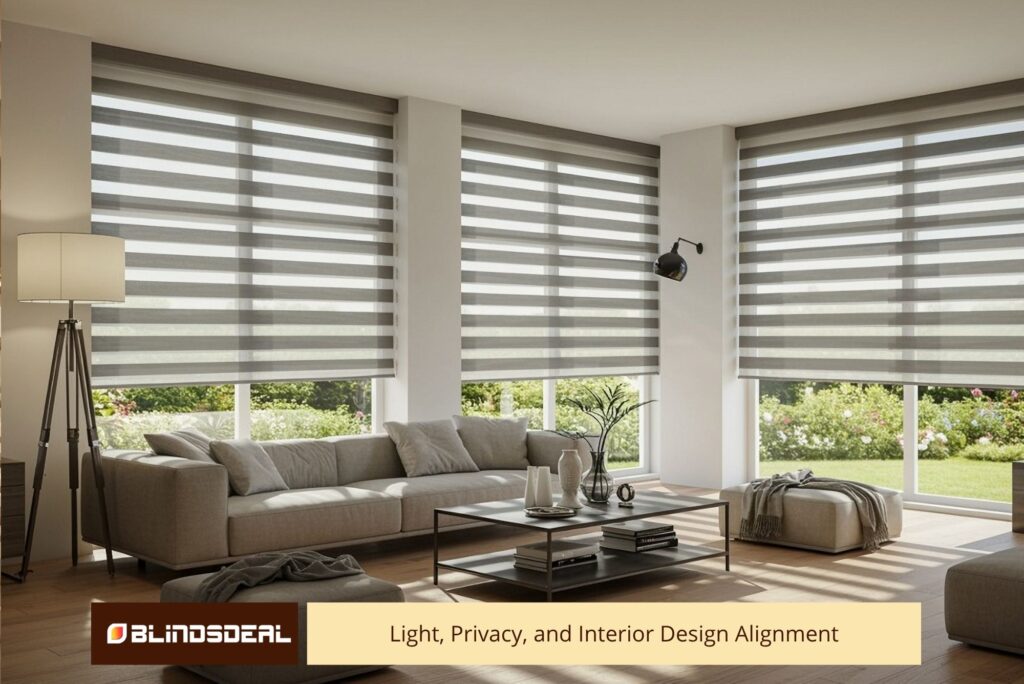
Custom blinds for non-standard windows can be specified across several variables beyond shape:
Motorisation is worth considering for any window that is above comfortable reach, which is common with gable triangles and high arched windows.
Custom blinds for awkward-shaped windows follow the same maintenance principles as standard blinds, with one practical note: because non-standard shapes often mean fixed rather than retractable coverings, they accumulate dust on exposed fabric surfaces more readily.
For fixed arch or circular shades, a soft brush attachment on a vacuum or a dry microfibre cloth at regular intervals is the most practical approach. Avoid removing fixed shades for washing unless the manufacturer confirms the fabric will hold its shaped form after laundering, since some shaped coverings lose their cut profile when wet.
High-quality materials are particularly important for fixed coverings that will not be replaced frequently.
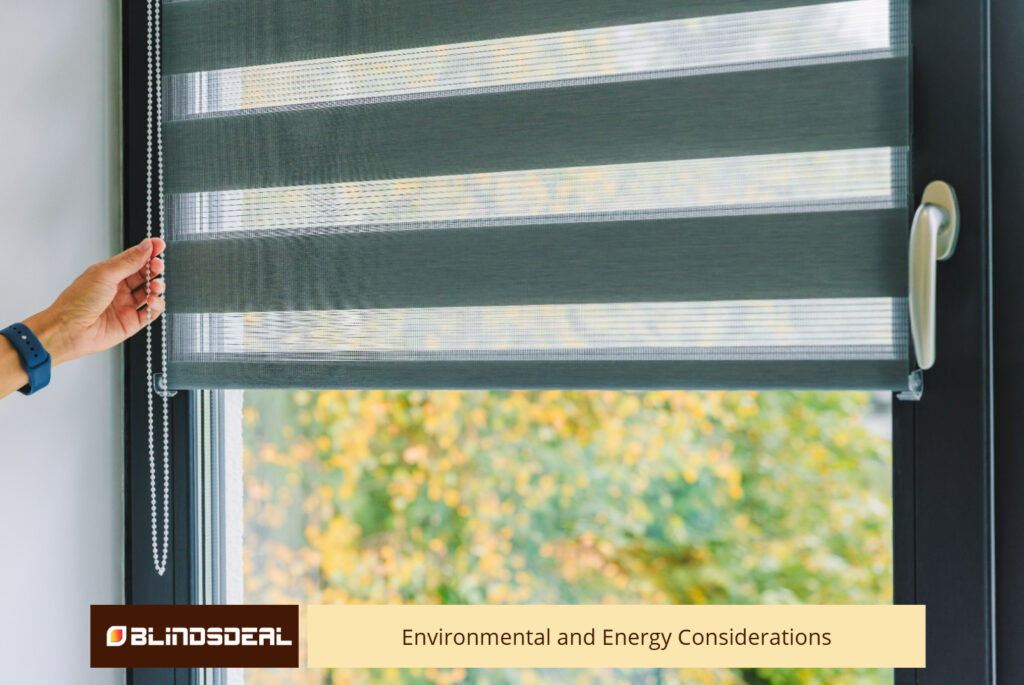
Cellular shades, including those custom-shaped for arched windows, have a honeycomb structure that traps air in the cell pockets. This can reduce heat transfer through the window in both summer and winter, which may contribute to lower heating and cooling costs depending on your climate and window orientation.
The effect varies with the number of cell layers (single versus double cell), the fabric weight, and how well the shade fits the window perimeter.
A custom fit is more relevant for energy performance than it is for standard windows, because gaps around an ill-fitting shade reduce any insulating effect.
Custom blinds for non-standard shapes carry a higher cost than off-the-shelf products because they require templating, custom cutting, and in some cases purpose-built headrails or mounting hardware. The price range varies with window size, shape complexity, chosen fabric, and whether motorisation is included.
Setting a realistic budget before beginning the selection process helps narrow material and mechanism options early. A blinds specialist can advise which combinations meet your functional requirements at different price points.
Professional measurement is strongly recommended for any window that is not a standard rectangle. The cost of a measurement visit is modest relative to the cost of a custom blind that is cut to an incorrect template.
During installation, non-standard shapes often require custom mounting solutions: shaped headrails, angled mounting boards, or face-mount frames built to the window’s profile. Professional installation ensures these are fitted level and securely, which affects both the appearance and the operating life of the blind.
Customising blinds for awkward shaped windows is a practical, solvable problem when the shape is identified correctly and the right product is matched to it. At Blinds Deal, custom window solutions are a core part of the service. If you have a window that does not fit a standard product, the custom blinds range covers options across shapes, fabrics, and operating systems.
Angled bottom-up or custom-cut shades follow the slope of triangular and angled windows, giving privacy and light control while fitting the exact contour. Professional measuring ensures the angle is cut precisely.
Yes. Custom cellular or fan-style shades can be shaped to follow an arch or curve, so the covering hugs the window line rather than leaving gaps. These are made to measure for each opening.
Record the width, height, and any angles or curves at multiple points, since odd shapes rarely match at top and bottom. For non-standard shapes, professional measurement is recommended to avoid fitting errors.
Motorisation is available for many custom blind types and is a practical choice for arched or high triangular windows that are above comfortable reach for daily manual operation.
Inside mounting gives a neater finish but requires adequate reveal depth, typically at least 50 mm depending on the product. For circular, oval, and shallow-reveal arched windows, face mounting over the reveal is the more reliable option and is what most installers recommend for shaped windows.