
Yes, and they’re one of the better options for a rented home. Roller blinds in rental properties give you real light control and privacy without changing much about the place. The blind lifts out of its brackets in seconds, the fabric is plain enough to sit against any wall colour, and the whole lot comes down in under half an hour when you move.
There’s one condition. The brackets screw into the window frame or the wall, which makes them a fixture, and fixtures need your landlord’s permission. Get that in writing before you pick up a drill.
Tenancy rules are set state by state, so the answer depends on where you live.
In NSW, installing or replacing an internal window covering such as curtains or removable blinds sits on the official list of minor changes. A landlord is not permitted to unreasonably refuse consent for anything on that list, and if they knock it back anyway, you can take the dispute to NCAT. The NSW Fair Trading page on making changes to a rental property sets out the full list. Worth knowing: the protection doesn’t apply to heritage properties, homes on the loose-fill asbestos insulation register, or social housing, and strata schemes carry their own restrictions.
Victoria treats it differently. Renters there can put up non-permanent window film and blind cord anchors without asking, but a blind that screws into the frame is a modification that needs the rental provider’s written permission. Consumer Affairs Victoria also lets rental providers charge a modification bond to cover the cost of undoing the work, though only where that amount would be more than $500. You can read the detail on the Consumer Affairs Victoria page for renters making changes.
Every other state and territory has its own version. The practical advice is the same everywhere. Send your property manager a short email with the window, the product and the fixing method, and keep the reply.
One thing that helps your case: offer to leave the blinds behind at the end of the lease. Most owners say yes fairly quickly when the alternative is bare glass and a tenant asking for curtains.
A roller blind has fewer fixing points than any other blind on the market. Two brackets, two or three screws each, and the tube clips straight in.
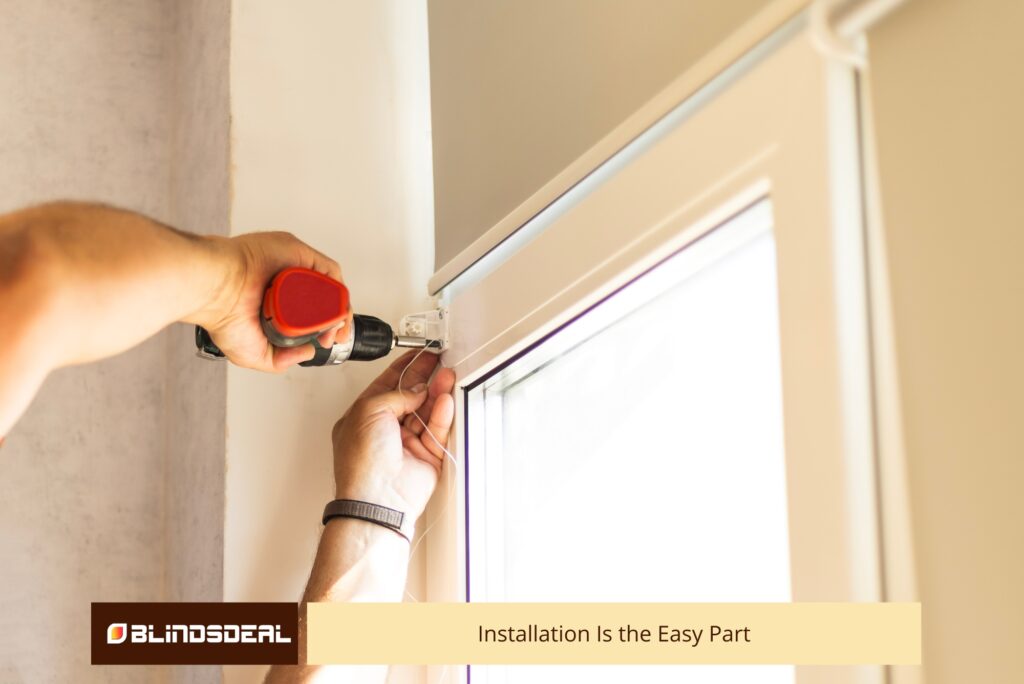
For a standard bedroom window, you’ll need a drill, a Phillips head screwdriver, a tape measure and a pencil. Mark your bracket positions, check them with a level, drill your pilot holes, screw the brackets on and snap the blind into place. Fifteen to twenty minutes per window is realistic once you’ve done the first one. Compare that to a venetian, where you’re handling a headrail, multiple centre supports and a valance.
You have two mounting choices. An inside mount sits within the window recess and leaves the architrave untouched, which is usually the tidier option in a rental because the screw holes end up hidden inside the reveal. A face mount goes on the wall or architrave above the window and gives better light block at the edges. Our measuring guide walks through both, and the step by step roller blind installation guide covers the fitting itself.
Measure at three points across the window and use the narrowest. Rental properties are rarely square, especially older weatherboard and brick homes, and a window that measures 1,180mm at the top can easily be 1,172mm at the sill.
This is where roller blinds beat most alternatives.
Lift the blind out of the brackets, undo four screws, and you’re holding the whole unit. Fill the holes with a bit of gap filler, touch up if the frame is painted, and reinstate whatever was there before. Our guide on removing blinds without damaging the window frame covers the fiddly bits, including what to do if the original fixings were poorly placed.
Be realistic about reuse though. Made to measure blinds are cut to one window, so a 1,450mm blind from your old lounge room won’t fit a 1,100mm window in the next place. If you’re on a 12-month lease and expect to move again, price it as a cost of living comfortably rather than an asset you’ll carry around. At around $84 a blind for a small window, that’s a reasonable trade for a bedroom you can sleep in.
Store the original curtains or blinds somewhere safe. Throwing them out is a fast way to lose part of your bond.
Rental interiors are usually white, off white or a builder’s beige, with flooring you didn’t choose. A patterned or bright window covering fights all of that.
Roller blind fabrics come in a short, restrained colour range for exactly this reason. Our blockout range runs through ice, cloud, mist and storm, and the sunscreen fabrics cover ice white, white, white grey and charcoal. Nothing there clashes with a landlord’s paint job, and nothing dates in three years.
For owners and property managers, the same logic applies in reverse. Neutral blinds photograph well for listings, suit any tenant’s furniture, and don’t need replacing because the last renter’s taste was different.
If you own the property, roller blinds are cheap to maintain and cheap to replace one at a time.
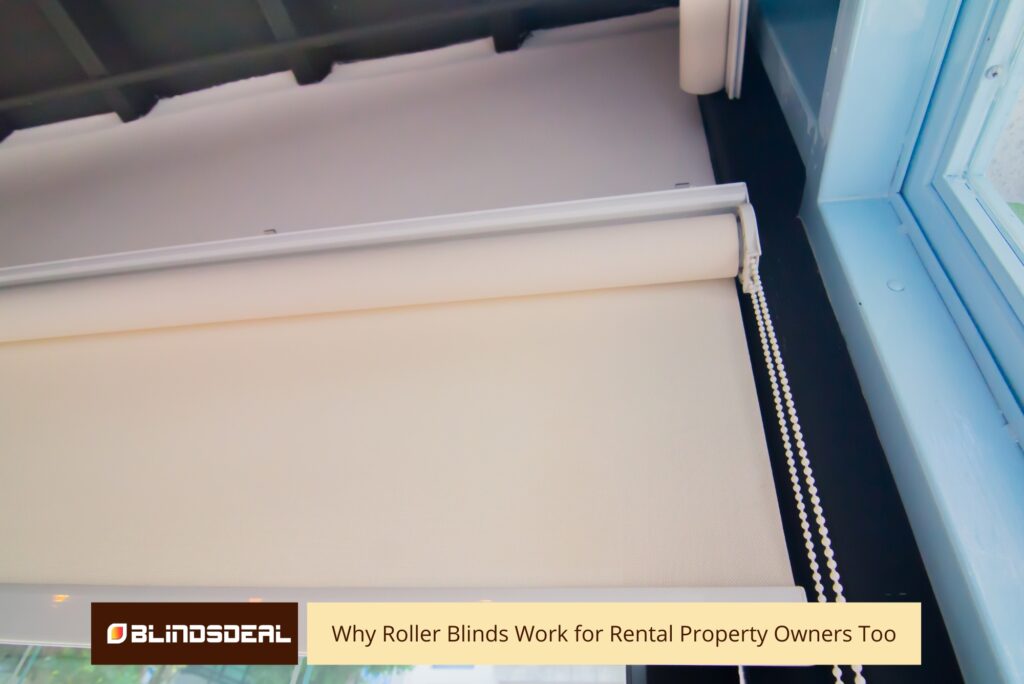
There’s a single fabric panel and one tube. No slats to bend, no cords to tangle, no vanes to fall off the track. When something does go wrong, you’re replacing one blind in one room, not rethinking the whole house. Our roller blinds carry a 10 year warranty against manufacturing defects, and every chain operated blind includes a child safety tensioner as standard, which matters in family rentals where loose cords are a known hazard.
Cleaning is a wipe with a damp cloth. Between tenancies that’s five minutes, not a trip to the dry cleaner with a set of curtains.
A few situations need more thought.
Very wide sliding doors are the main one. A single roller over a 3m opening needs stronger fixings and a heavier tube, and two blinds side by side often works better. Heritage listed properties come with restrictions that override the standard minor changes rules. And in strata buildings, by-laws sometimes dictate what window coverings can look like from the street, so check the by-laws before ordering charcoal.
If your lease has less than six months to run and the landlord won’t let you leave the blinds behind, tension rod curtains or a temporary blockout panel is the cheaper answer.
Yes, unless your lease already allows it. In NSW your landlord can’t unreasonably refuse, because internal window coverings are on the minor changes list. In other states the rules vary, so ask in writing and keep the reply.
Not if you patch them properly and put the original coverings back. Small, filled bracket holes generally fall under fair wear and tear once the frame is restored, though the safest approach is to agree the exit condition with your property manager up front.
Roller blinds need bracket fixings, so drilling is part of it. If drilling is off the table entirely, look at tension rod curtains or non-permanent window film instead.
Prices start from $84 per blind and depend on window size, fabric and control type. Shipping is free Australia wide, so a three-bedroom unit can usually be done for a few hundred dollars.
Grab your tape measure, check the width at three points, and see roller blinds online for an instant price on your exact window size. Made to measure, blockout or sunscreen, delivered free anywhere in Australia.
Not sure about mount type or which fabric suits a west facing window? Send our team the details and we’ll talk it through before you order.